
A Purpose Place gives you the space and the opportunity to expand your capabilities.

What do YOU need to choose to positively notcare about?

What if your organization was seen as the one where every talented person in their field wanted to be employed because they knew that they would be better able to develop their talents there than anywhere else?
What if YOU were seen as THE boss that every talented individual wanted to have because they knew that working for you meant they were going to grow into the most talented version of themselves they could imagine? Or couldn’t even yet imagine?
What if YOU were consistently praised and promoted by your organization because they noticed that all the individuals that you led were consistently developing themselves to unanticipated levels of talent and achievement? And EVERYONE—your people, the organization, and yourself—were experiencing unimaginably positive outcomes as a result?
This is the vision of the “Leadership is Teachership” model.
I also distinguish here between “intentional” and “incidental.” In INTENTIONALLY prioritizing the development of the talent of our people, we actually enable them and the organization to INCIDENTALLY achieve even greater outcomes than we could have anticipated.
Hope this gets you excited! More details on “Leadership is Teachership” to come!

I honestly believe that these ideas represent the future of thinking about leadership.
Recently, members of my leadership groups have been fascinated by a relatively new category of theories that have emerged in recent years: 4E Cognition.
4E Cognition is a set of theories that emerged at the intersection of cognitive science, affective science, neuroscience, and philosophy of mind.
Basically, 4E perspectives look at the ways in which cognition or “the mind” are processes not limited to the brain. Yes, you heard that right. We can’t think without involving the body, the environment, objects around us, and our actions.
The Four E’s are:
Embodied
Embedded
Extended
Enacted
I’d love to give you an idea of what 4E Cognition theory is all about and how we can apply these theories to leadership.

If, at moments we most need them, our best talents become stifled by our negative thoughts and feelings, what can we do to find our best selves?
In this video, I share with you a technique I first developed for my own benefit—to help me learn to find the best version of myself in the midst of anxiety-inducing experiences.

I'm going through the "P" words of what gets in the way of leadership and life! These are people pleasing, perfectionism, procrastination, analysis paralysis, and impostor syndrome.
As promised, here’s the video in which I discuss perfectionism. I talk about what it is, where I think it comes from, how it gets in our way, and how we can change our thinking to be free from the need to be perfect!

I created this video on people pleasing for those in my leadership groups, but I hope it may resonate with anyone interested in leadership. It's a short, five-minute video on a topic that I could probably fill entire days working on. People pleasing can be detrimental to ourselves as leaders, but there's hope!
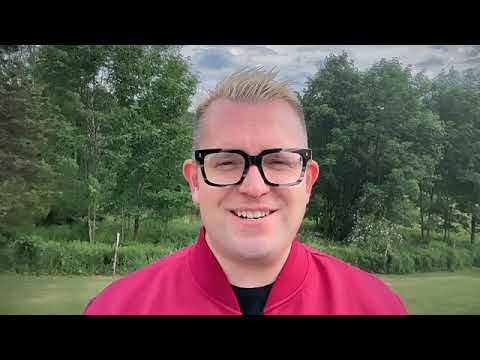
As a leader, I think it’s helpful to “Start with I”:
Who am I?
What am I about?
What is it that I want?
Let’s take a look at what can get in the way of our ability to answer these questions for ourselves!

Leaders often ask me how to approach conversations with their direct reports regarding the distinction between "meets expectations" and "exceeds expectations." At annual review time, this can be an awkward conversation. Here are some ways to handle it!

This is a question that emerged in my Skool: "Leadership is Teachership" Are you ready for an upper level leadership or management position? Is that something you want to take on?

As part of my skool group "Leadership is Teachership", I answer the question of "How do I go from being a peer to being the supervisor of those peers?" Also known as the "Buddy to Boss" problem. I hope this helps!
